



A solid commercial snow management plan is about much more than calling a plow truck when the forecast looks bad. Property managers and facility directors across Ellicott City, Columbia, Glenelg, Glenwood, Dayton, and surrounding areas know all too well what happens when snow and ice response is reactive rather than planned. Liability exposure goes up, access gets disrupted, and tenants or visitors lose confidence in the property fast. So what does a real commercial snow management program actually cover, and where does generic ice control fall short?
It Starts Before the First Flake Falls
The groundwork for effective commercial snow management happens in the fall, well before any storm is in the forecast. That means site walks, documentation, and a written service plan that accounts for the specific layout of your property. Where are the high-priority areas? Which entrances need to be clear first? Where does snow get stockpiled without blocking drainage or sight lines? These are not questions you want to answer at 4 a.m. during a nor’easter.
A professional plan also establishes trigger thresholds, meaning the exact accumulation or temperature conditions that automatically activate service. No waiting for a call, no guessing whether you qualify for a response. For HOAs, apartment communities, and commercial campuses throughout Howard County and the surrounding region, that kind of predictability matters enormously.
What Full-Service Coverage Actually Looks Like
Generic ice control typically means someone shows up with rock salt and spreads it around. A comprehensive commercial snow management program covers quite a bit more ground than that, literally and figuratively.
Plowing and haul-away, sidewalk clearing, salting, anti-icing pre-treatment, and follow-up monitoring after a storm are all part of a complete approach. Anti-icing, in particular, is something many property owners do not think about until after the fact. Applying liquid deicer before a storm hits prevents ice from bonding to the pavement surface in the first place, which reduces the volume of material you need afterward and makes the overall clearing process faster and more effective.
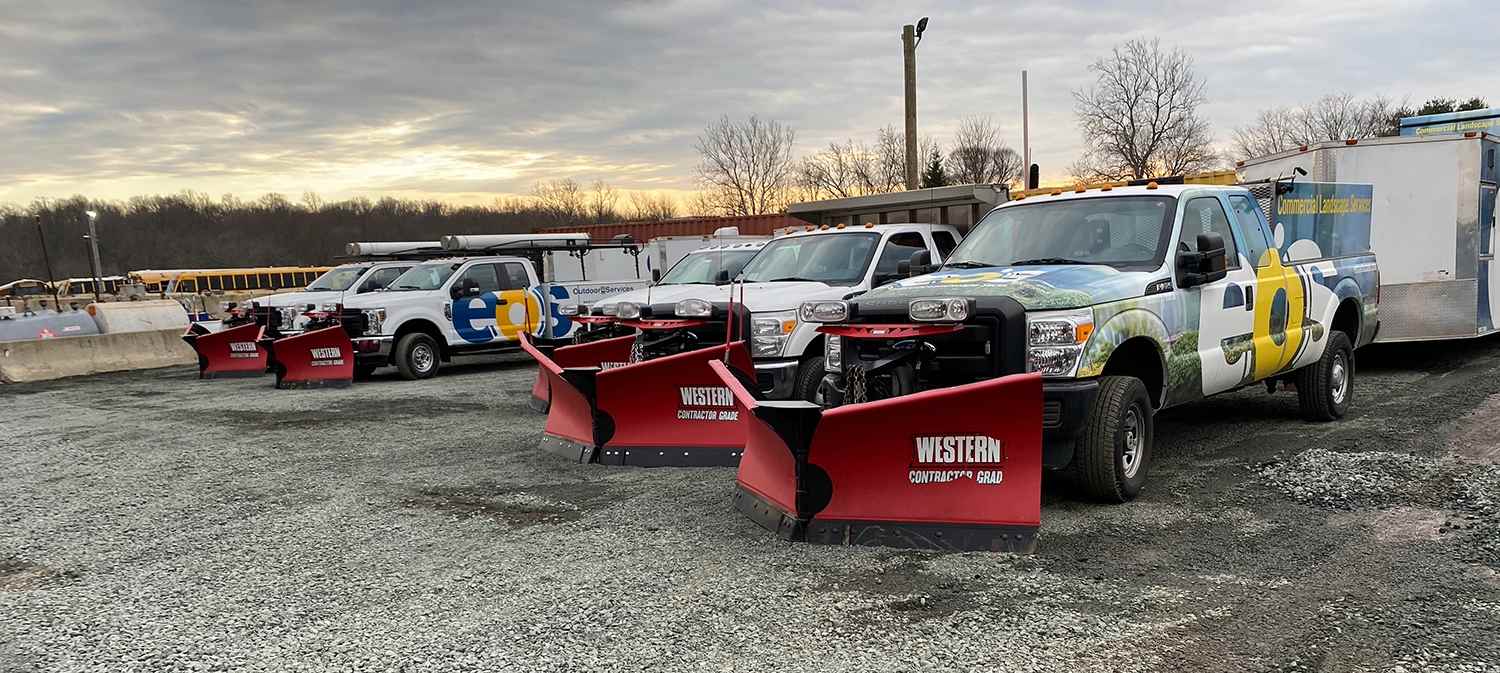
The equipment matters too. A provider with the right mix of truck-mounted plows, skid steers, and walk-behind equipment can handle everything from large parking decks and access roads down to the tight pedestrian paths and stairwells that often get missed. Properties like educational campuses and municipal spaces have especially complex layouts, and that complexity demands crews who have practiced on similar sites before.
Why Generic Ice Control Falls Short
Relying on a one-size-fits-all approach to ice control creates real gaps. First, rock salt alone is not always the right tool. At lower temperatures it loses effectiveness, and over-application can damage pavement, harm turf and landscaping, and create runoff problems. A well-run program calibrates material type and application rates to the conditions, using blended deicers, magnesium chloride, or calcium chloride when the situation calls for it.
Second, generic service typically lacks the documentation that commercial property owners actually need. If a slip-and-fall incident occurs, having a detailed service log with time-stamped records of every treatment and site visit can be the difference between a defensible position and a costly one. Reputable commercial snow management providers supply that documentation as a standard part of the service.
Third, and perhaps most practically, generic providers often lack the capacity to prioritize your property during a widespread storm event when every customer is calling at once. Established commercial contractors in the region, those with dedicated crews, pre-positioned equipment, and multi-year experience managing properties from Ellicott City and Columbia out through Glenelg, Glenwood, and Dayton, are structured to respond at scale.
Building in Accountability and Communication
One thing that often separates experienced commercial snow management from a transactional arrangement is communication. Property managers should expect a clear point of contact, a defined escalation process during major events, and consistent updates during and after storms. If you are managing an HOA or overseeing multiple buildings, that communication loop is not a nice-to-have; it is essential to keeping residents and stakeholders informed and satisfied.
At eos Outdoor Services, our team brings over 100 years of combined leadership experience to every contract we take on, including clients with high-visibility, high-accountability properties across Maryland. We know what commercial property decision-makers need because we have been delivering it across Howard, Baltimore, Anne Arundel, Montgomery, Carroll, and Frederick Counties for decades.
October is a good time to get your winter plan in place. If you would like to talk through what a commercial snow management program for your property would include, please give us a call or drop us an email. We are happy to answer questions and walk through the details with you.