


The cost of artificial turf installation on a commercial property is one of those questions that comes with a lot of “it depends.” And while that answer can feel frustrating when you’re trying to budget a project, there are real, concrete factors driving the price that are worth understanding before you request a quote. We work with HOAs, property managers, apartment communities, municipal spaces, and educational campuses throughout Ellicott City, Columbia, Glenelg, Glenwood, Dayton, and surrounding areas in Maryland, and pricing questions come up constantly. Here’s what actually shapes the number on your proposal.
The Size of the Installation Area
This is the most obvious cost driver, but it’s worth spelling out clearly. Artificial turf is priced in part by the square foot, so larger installations naturally carry a higher total cost. That said, larger projects sometimes benefit from more efficient mobilization costs spread across a bigger area. A small courtyard installation at an apartment complex in Columbia is going to look very different on paper than a multi-field installation at an educational campus in Glenelg, even if the per-square-foot rate is similar.
What catches some property managers off guard is that the visible surface area isn’t the only measurement that matters. The ground preparation beneath it matters just as much.
Site Preparation and Base Work
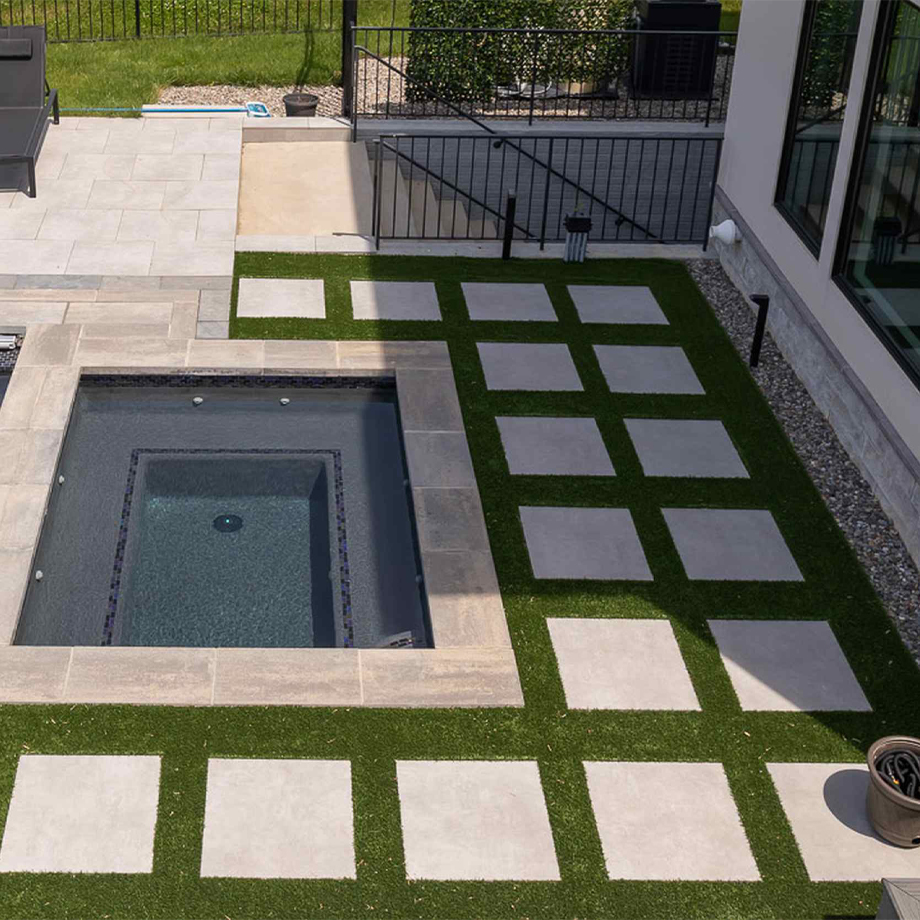
This is where a lot of the real cost lives, and it’s also where corners get cut by less experienced crews. Proper artificial turf installation requires grading the existing ground, removing natural grass or other material, and installing a compacted aggregate base that supports drainage and keeps the surface level over time. If the existing site has drainage problems, slopes that need correction, or difficult soil conditions, that prep work adds time and material cost.
For commercial properties in Howard County and Anne Arundel County, we’ve seen everything from straightforward flat lawn conversions to complex sites with clay-heavy soil that requires significant regrading. The base work isn’t glamorous, but it’s what separates a turf installation that looks good five years from now from one that’s buckling and puddling within a season.
Turf Product Selection
Not all artificial grass is the same. The product itself varies considerably in quality, pile height, fiber material, infill type, and intended use. A high-traffic commercial application near a busy apartment entrance in Dayton calls for a more durable, UV-stabilized product than a decorative installation along a walkway. Products designed for pet-friendly or high-foot-traffic environments typically carry a higher upfront cost, but they hold up significantly better over the life of the installation.
We help commercial clients match the right product to the actual use case, because selecting the wrong grade in either direction costs money: either in premature replacement or in overspending on a product that’s more than the application requires.
Edging, Borders, and Integration with Existing Features
How the turf meets existing hardscaping, curbing, planting beds, or walkways adds complexity and cost. Clean, finished edges require bender board, specialized fasteners, or custom cuts around obstacles. If a property in Glenwood has intricate bed lines, integrated irrigation, or existing pavers, the installation crew has to work carefully around those features rather than rolling out turf in open space. That takes more time and skill, which is reflected in the price.
Access and Logistics
Commercial sites don’t always make installation easy. Tight access points, parking structures nearby, underground utilities, restricted work hours in occupied residential communities, and the need to phase work around daily operations all affect how a project is priced. These are legitimate considerations, not padding.
Long-Term Value Is Part of the Calculation
One thing we consistently point out to commercial clients across Howard, Baltimore, Montgomery, Carroll, and Frederick Counties is that the cost of artificial turf installation should be weighed against the reduction in ongoing maintenance. No mowing, no irrigation for that zone, and significantly reduced labor over a multi-year period. For properties where natural turf struggles to establish or maintain itself, the math often favors synthetic turf within a few years.
With over 100 years of combined experience among our leadership team and a track record serving notable clients throughout Maryland, including the MD Stadium Authority at Camden Yards, we approach turf installation with the same attention to quality and long-term performance we bring to every project.
If you’re evaluating artificial turf for a commercial property in or around Ellicott City, Glenelg, Columbia, or anywhere in our service area, we’re glad to walk through the specifics with you. Give us a call or drop us an email and we can talk through your site, your goals, and what a realistic scope looks like for your property.